+86 13332602397
+86 13332690275

Tool Steel Information

Summary

Tool Steel is a special Steel that is known for its High Hardness and wear resistance properties and its ability to retain its sharp edge during the manufacturing process.

This steel also exhibits good levels of toughness considering the high nature of the alloying elements present. The majority of these steels need to be heat-treated to achieve their optimum metallurgical properties.

These steels can also undergo a further refining process known as Electroslag Remelting (ESR).

ESR is a secondary steelmaking process that uses an electric current to melt a consumable electrode, which then drips through a molten slag into a water-cooled mold, resulting in a refined, high-quality ingot. This process allows for precise control of chemical composition and solidification, leading to improved material properties.

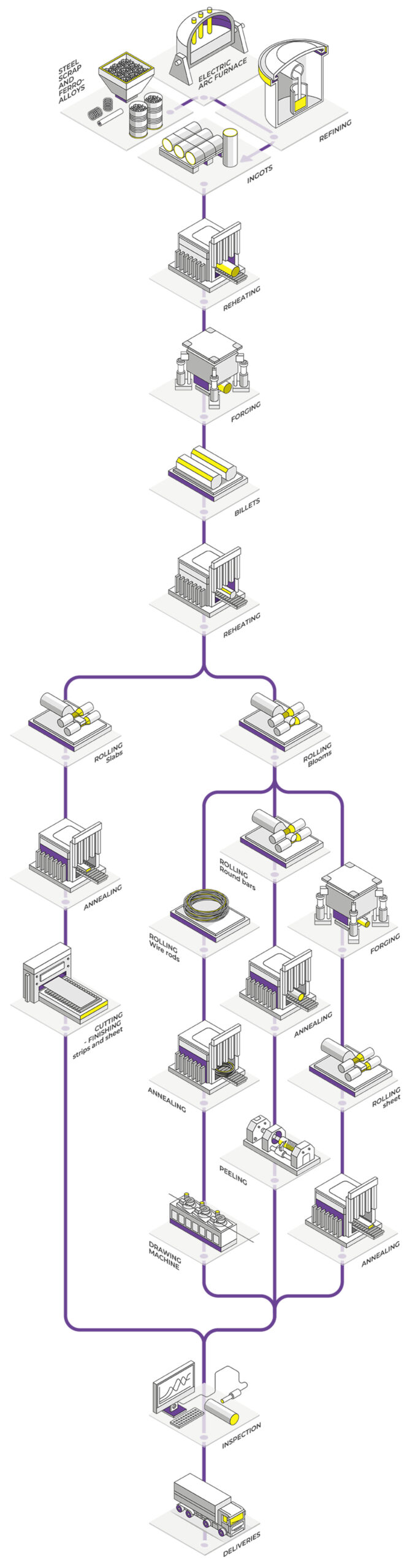
Steel Specifications

Key characteristics of tool steel:

  • High Hardness: Tool steels are designed to be extremely hard, making them resistant to deformation, wear and have high compressive strength.
  • Wear Resistance: They are highly resistant to abrasive and adhesive wear, ensuring long-lasting performance.
  • Edge Retention: They have the ability to maintain a sharp cutting edge, even at elevated temperatures, making them suitable for cutting and drilling applications.
  • Heat Resistance: Tool steels are often heat-treated to enhance their hardness and can withstand high temperatures during use and some have the ability to withstand back tempering. This is particularly true for Hot work tool steels.
  • Corrosion Resistance: Some manufacturing materials can be corrosive, so the steel needs to resist degradation this is particularly important in Plastic Mold steels and in Food preparation. Plastic mould steels are particularly good in this area.

Process and Main Characteristics​